There’s nothing I love more than to integrate engineering into my science lessons, and I had the opportunity this week when I brought in my giant lotus leaves.

We have been studying the Amazon rainforest in both geography and English this term, as well as looking at Living Things and their Habitats, so it was a great opportunity to investigate how the lotus plant has adapted to live in water.
In addition to having specialized roots which take in oxygen from water and flat leaves to help with floating, the plant is ultra-hydrophobic, which means that it repels water.
The ‘lotus effect’ as it is known, is indeed quite magical – even on dried leaves. When drops of water are squeezed from a pipette, they literally bounce off the leaves like small crystal balls – a real ‘awe and wonder’ moment for the children.
This remarkable reaction to water, has major benefits. Not only does it free the surface from excess water, but it allows the plant to self-clean, as the tiny water droplets pick up any dirt particles when they roll off the leaf.
Biomimicry
Having demonstrated the ‘lotus effect’, I introduced the concept of biomimicry to my class. Biomimicry, as the name suggests, means ‘imitating nature’ and is an approach used by engineers to solve all kinds of problems.
I explained that perhaps one of the most well-known inventions inspired by nature is Velcro® invented in 1948 by Swiss engineer, George de Mestral. He noticed seeds stuck to his dog after a walk and wondered why they were so sticky. When he looked at one under a microscope, he saw that it was made up of a series of hooks that had grasped the fur. He decided to copy this idea and made his own version. This was something that all the children could relate to, as many had Velcro® fastenings on their shoes.
The Lotus Effect
This then led to a discussion as to what products might have been inspired by the ‘lotus effect’. If they were engineers, how would they use it? Where might self-cleaning materials be useful? We talked about windows in sky-scrapers. If these could be cleaned just by rain, then that would be save a considerable amount of time and expense.
We then watched an video from Interesting Engineering, which looks at how the lotus effect was discovered and some of the products that it has inspired: https://youtu.be/Xp0SAdDUQ-o?si=qYKhj31b6ISxIpRa
One of the dramatic events in the video is when black paint is thrown at two men wearing white shirts. One of the shirts has been treated with a superhydrophobic coating and the paint just bounces off.
By this time the children were very motivated to investigate the effect for themselves. They were provided with two petri dishes – one with a square of dried lotus leaf tea in (from Ebay) and the other with a square of material which had been treated with a synthetic hydrophobic coating. (NB: Examples of such cloth can be found on the internet – search for Nano-TexTM fabric).

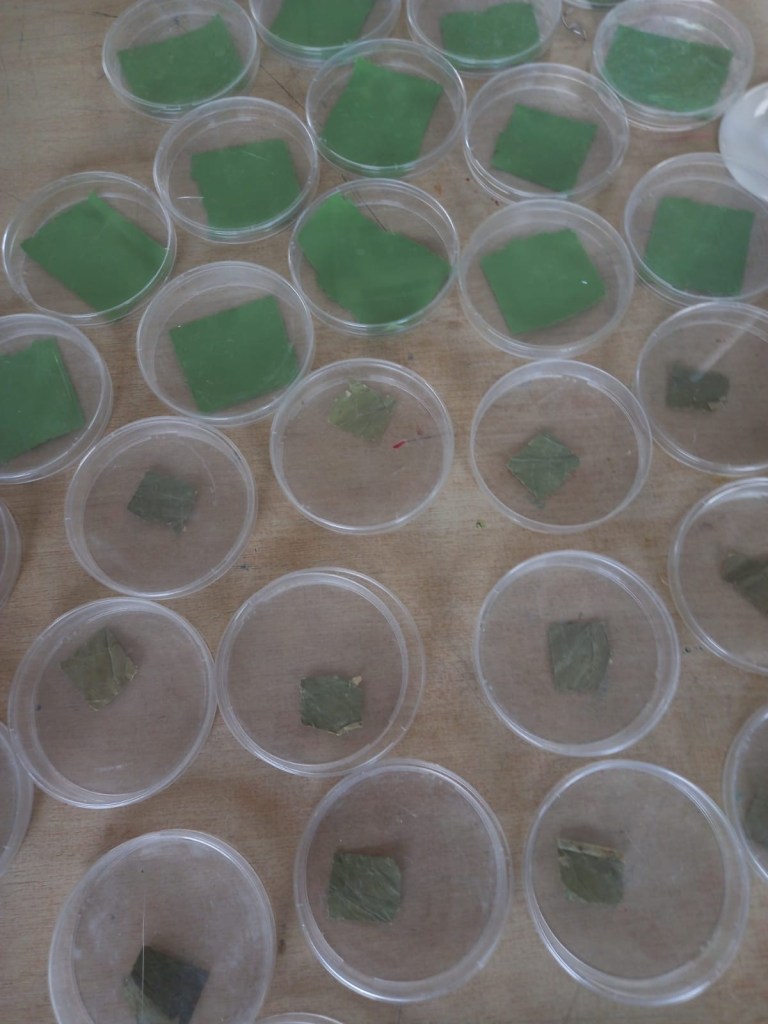
In order to gain maximum benefit from the investigation it was important that the children followed a series of steps, one sample at a time.
These were as follows:
Exploring the Lotus Effect
- Place a few drops of water on your lotus leaf and observe the effects
- Submerge into glass of water
- What can you see?
- Sprinkle pepper on the surface. Then place a few drops of water and tilt.
- What happens?
- Do the same with the Nano-TexTM cloth.
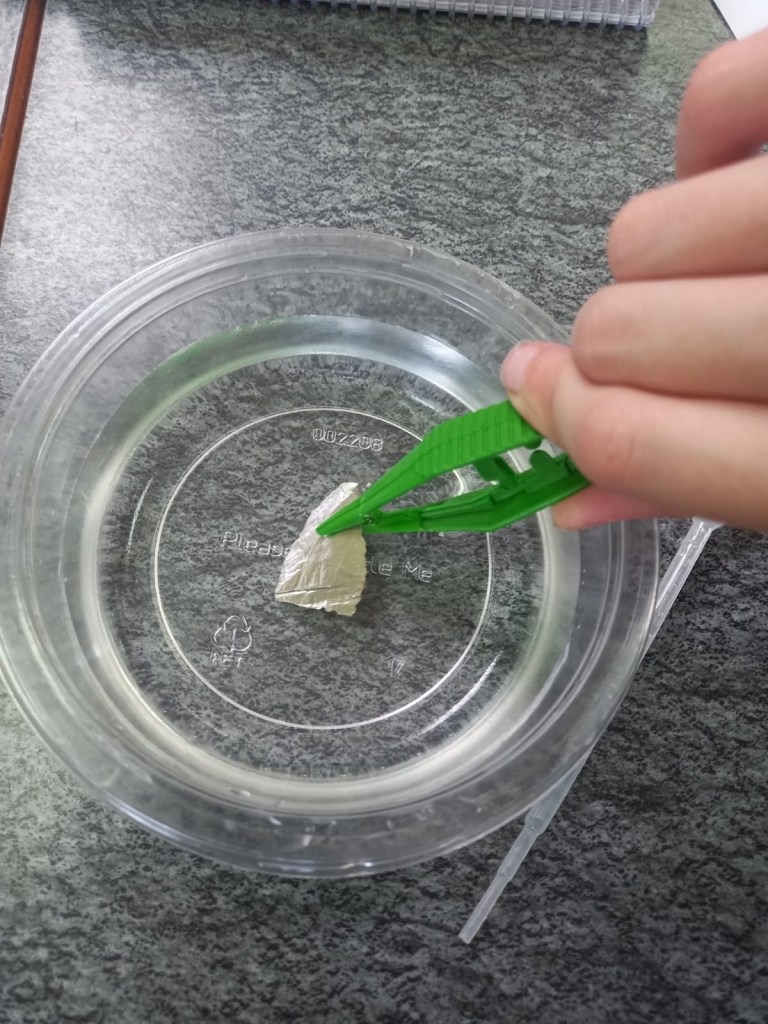
They had to use tweezers to handle the samples, as I explained that they were very delicate and oil from their fingers could affect the hydrophobicity of the dried leaves.
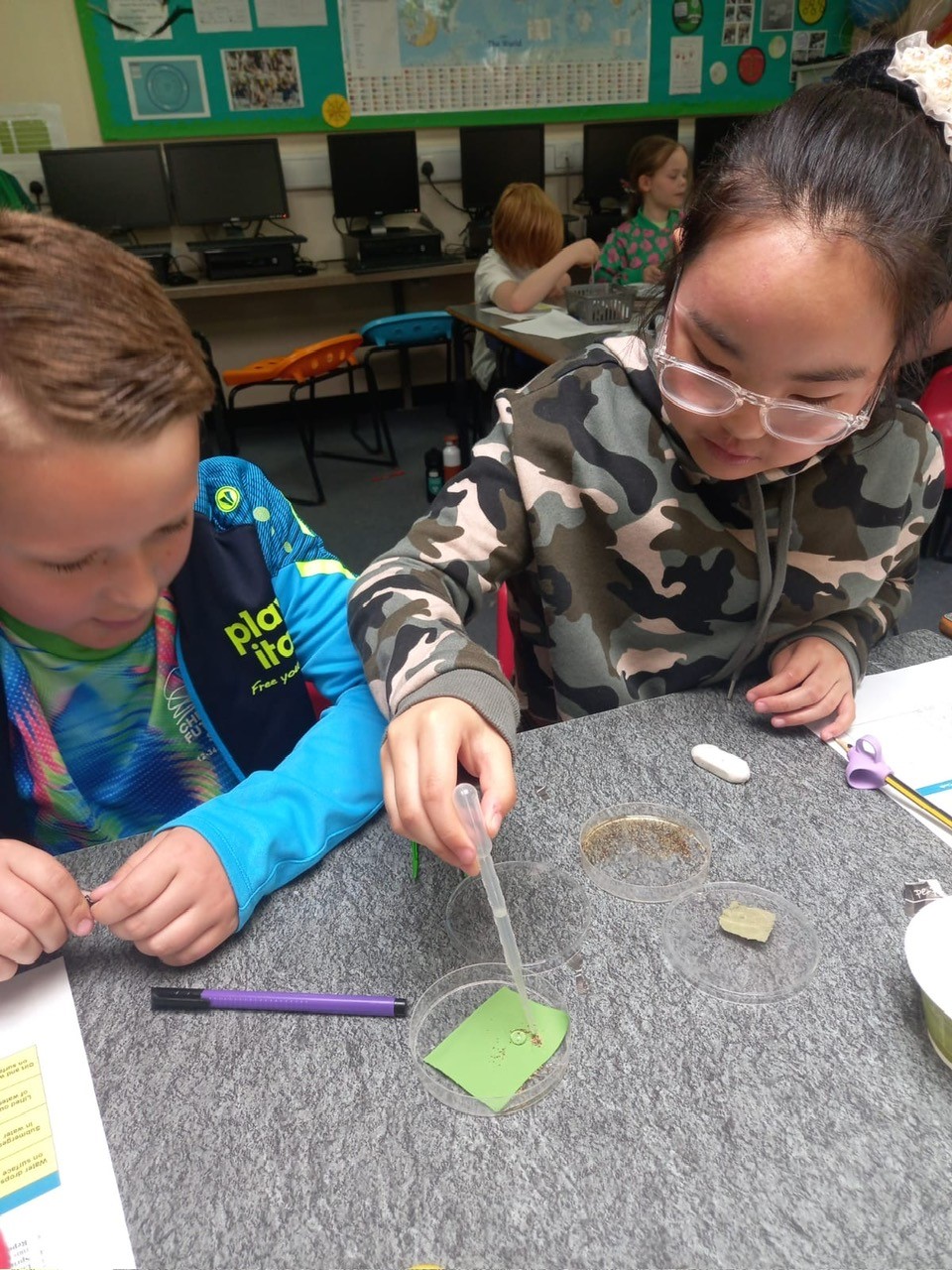

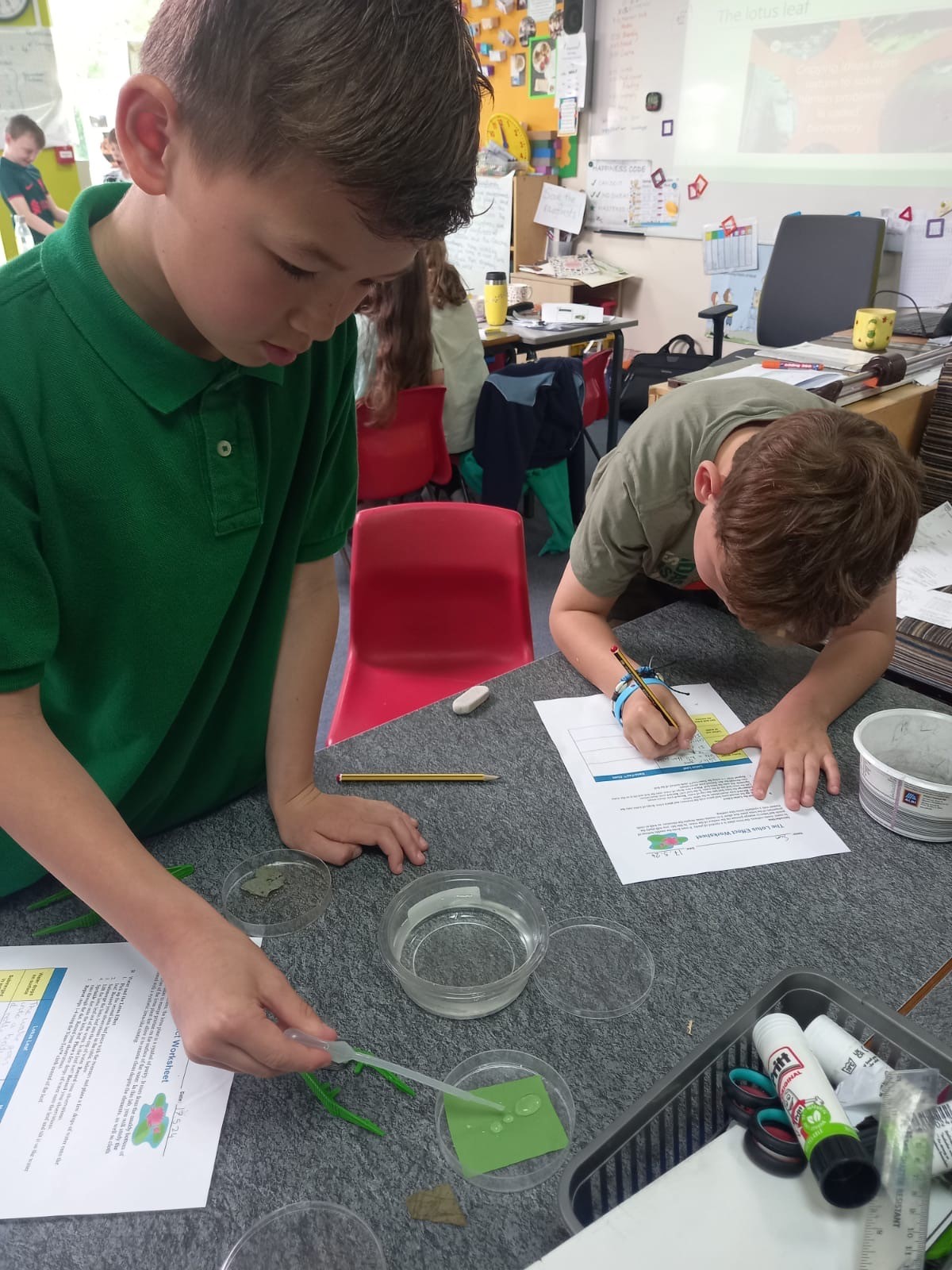

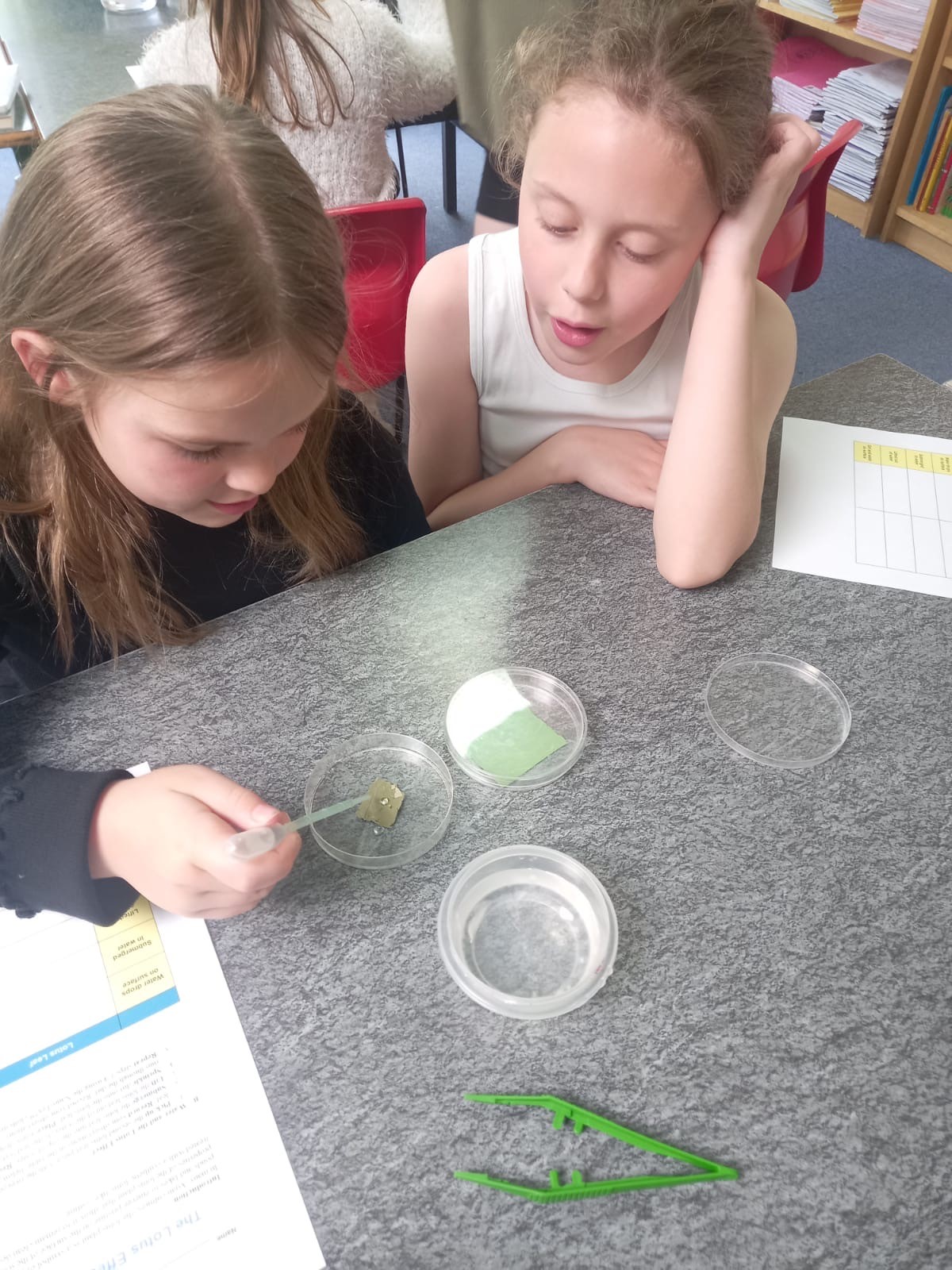
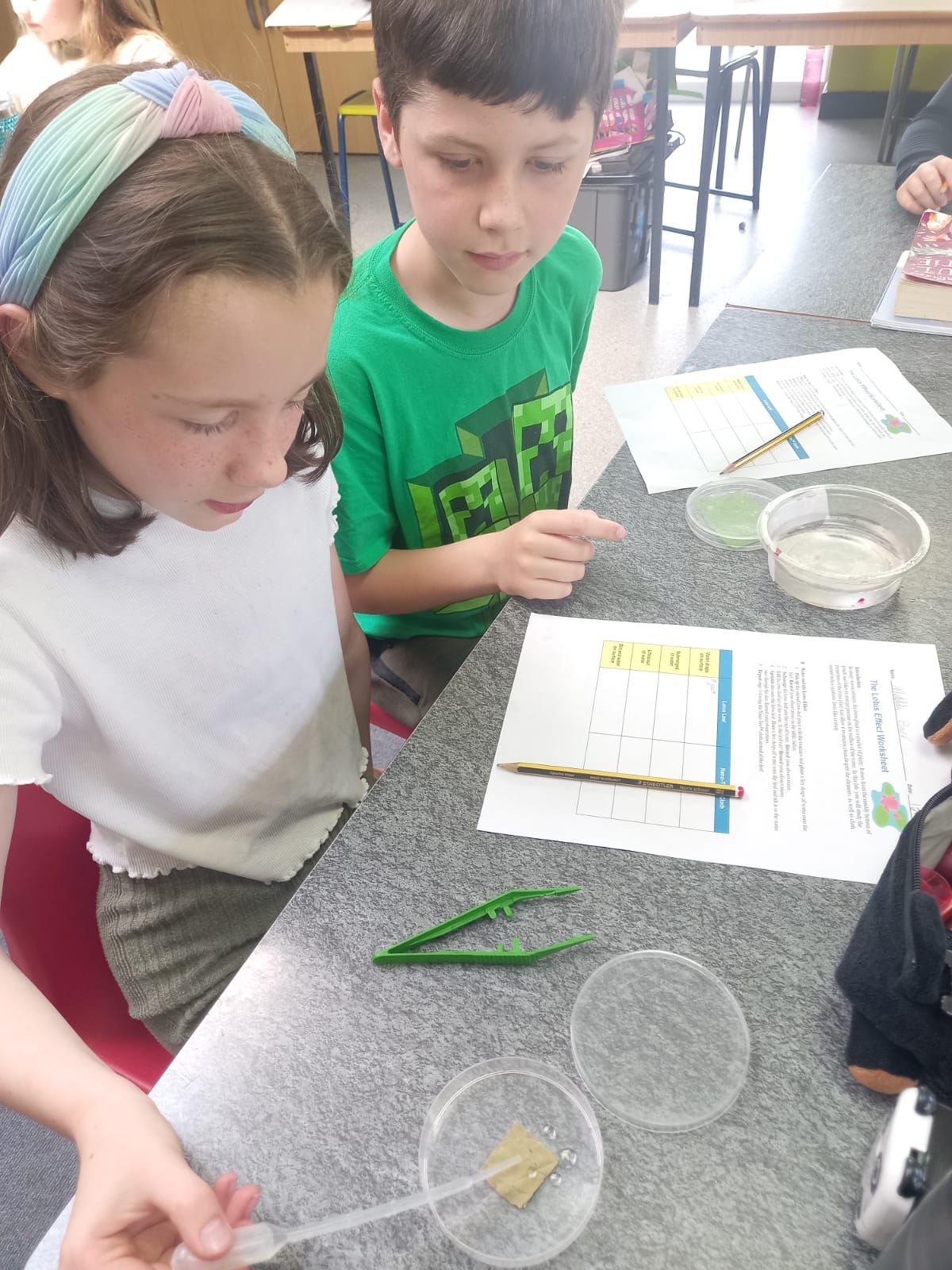
Their observations were recorded in a prepared table.
I was delighted both at how methodical the children were and the careful observations that were taking place.

When you submerge the lotus leaf in the water, one of the sides develops a silver sheen. This is caused by a thin layer of air being trapped on its surface. When the leaf is then removed from the water, it emerges completely dry – a phenomenon that delighted the children. The same happened with the Nano-TexTM cloth
Taking it further
This investigation could be taken further by finding out whether other leaves demonstrate the same levels of hydrophobicity – cabbage, broccoli, sprouts, kale and elephant’s ear are all possible choices.

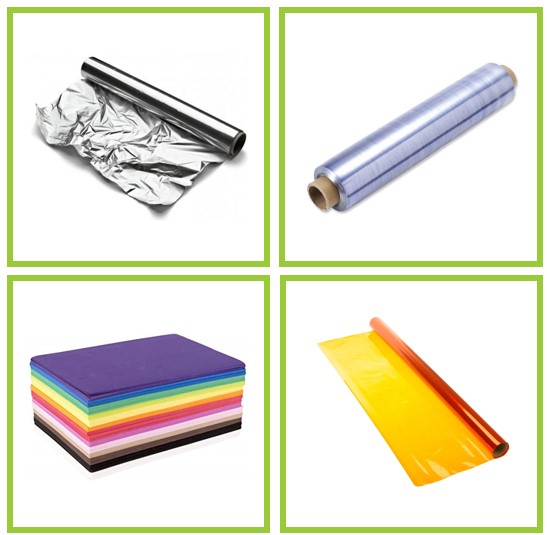
And, how many synthetic materials such as tin-foil, cling-film, cellophane and foam exhibit this property?
Is there a difference between being water proof and truly water repellent?
This lesson was adapted from the https://www.teachengineering.org/ website.






 Think Like An Engineer