Last July the Rode Heath Y5s took part in a summer STEM partnership project initiated by the CIEC – the Centre for Industry Education Collaboration – designed to bring STEM ambassadors and primary schools together, to work on specific CIEC projects.
We were lucky enough to be allocated Deborah Whitworth-Hilton, a director of the international engineering company, Uniper, one of the world’s largest producers of low carbon power. She guided us throughout the project and arranged for us to visit Connah’s Quay, a gas-fired power station in Flintshire, run by Uniper, which generates electricity by burning methane. The timing couldn’t have been better, as our now-Year 6 students are just beginning their unit on electricity.
An Impressive Location – Connah’s Quay
Connah’s Quay, situated on the south bank of the River Dee, spans approximately 243 acres. Part of this land is designated as a nature reserve to protect the area’s Site of Special Scientific Interest (SSSI) status. From the plant manager’s office at the top of the building, there is a breathtaking view, with the river stretching out toward the Irish Sea, dotted with boats below.

A Warm Welcome and an Engaging Day Ahead
Upon arrival, we were welcomed by Rob, a retired teacher, who guided us to the new Education Centre. Our school was among the first to experience this programme, so we didn’t know exactly what was planned for us – but it exceeded every expectation. The day was organized seamlessly, and the staff had crafted an engaging timetable designed to bring electricity to life for our pupils.
After a brief introduction, we split into three groups and rotated through hands-on activities, led by our hosts: Mark, Matt, and Rob. Each activity introduced key concepts in electricity in an interactive and memorable way.
Hands-On Learning: Exploring Conductivity
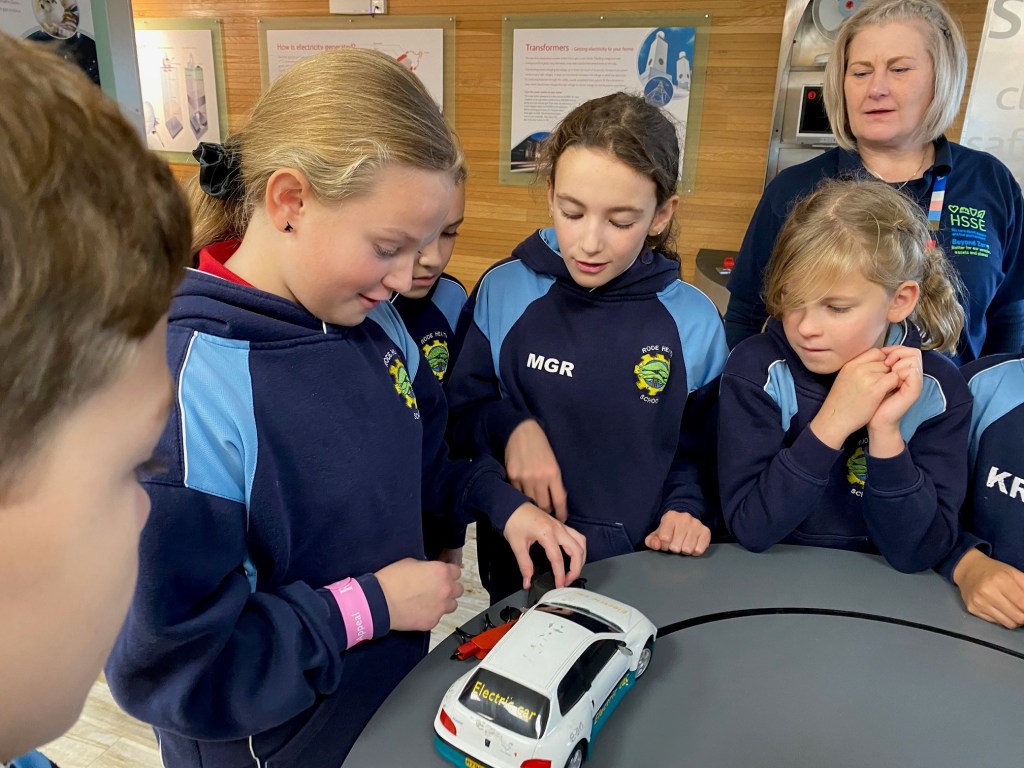
The first hands-on activity was an investigation into conductivity. Students learned to test various materials to see which could conduct electricity, helping them understand which materials power up a circuit. The experiment used a miniature car that only moved around the circuit if the right conductive materials were chosen. It was a clever way to revisit and reinforce concepts they had learned in Year 4 – and it was gratifying to see how much they remembered!


Renewable Energy and Global Awareness
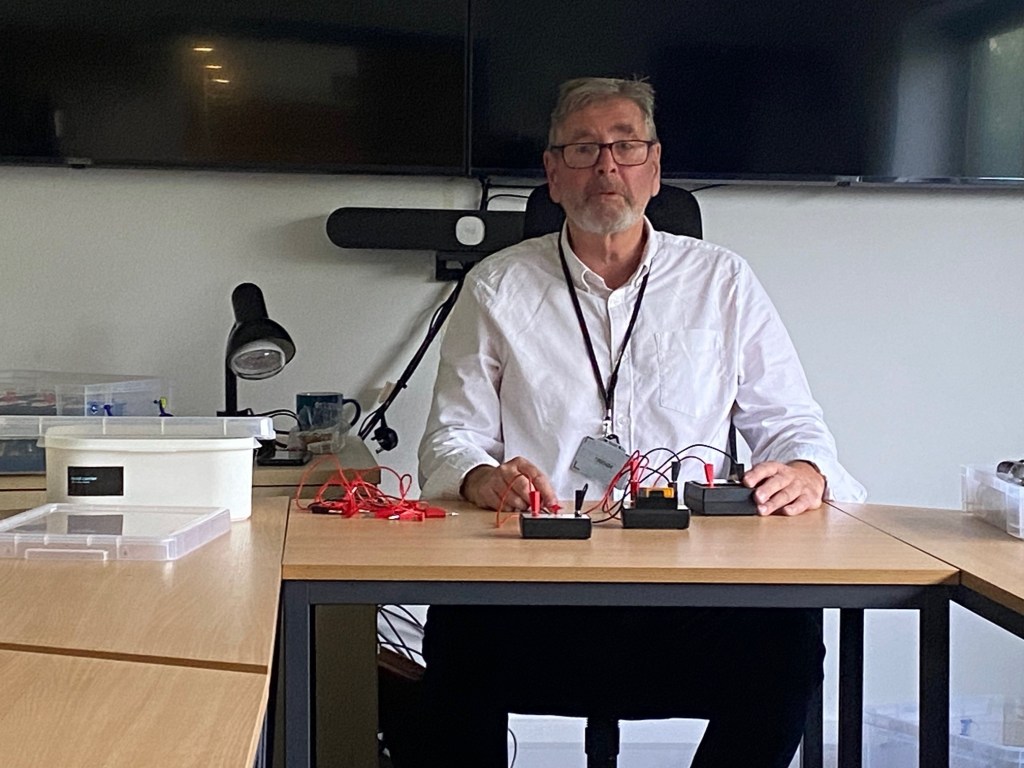
The second activity delved into renewable energy and the importance of electricity access worldwide. The children were surprised to learn that around 700 million people around the globe currently live without electricity. For many of them, it was hard to imagine life without light, heating, or all the devices they depend on every day. They tried out wind-up torches and radios, discovering how much effort it takes to keep them charged – something they found tiring after only a few minutes!
Next, they explored solar energy by constructing a simple circuit powered by a solar battery, lighting up a small bulb. This hands-on approach helped them see renewable energy in action, and they were captivated by how the sun could generate electricity.


Inside the Control Room: Monitoring the Power Station
For the third activity, we stepped into a room designed to resemble the control room of the power station, where engineers closely monitor and manage the plant’s complex systems. Here, students were amazed to learn that it can take up to 85 minutes to fire up a generator! Connah’s Quay operates as a “peak” energy provider, which means it’s activated only when electricity demand is high. This insight highlighted the station’s role in balancing energy supply during peak times.
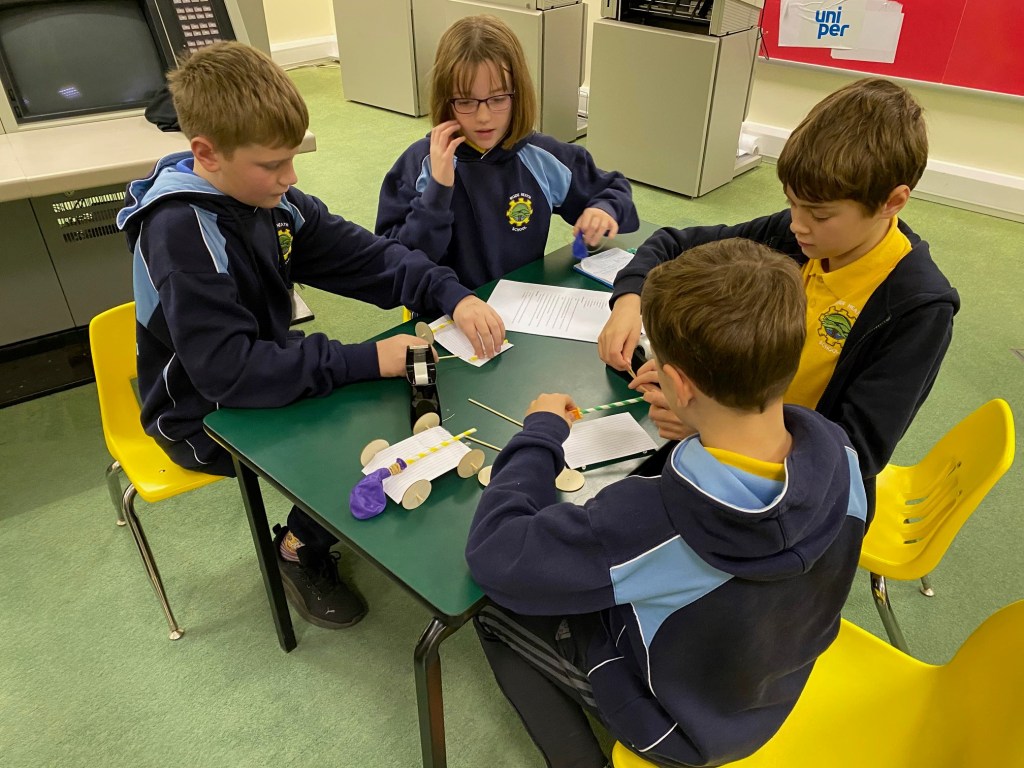
The main aim of the activity was to illustrate how potential energy can be stored. The children each built a balloon-powered car to explore this concept, racing them against each other and learning how stored energy in the balloon could propel their cars forward. This hands-on approach made the science of stored energy and power generation memorable and fun!


A Closer Look: Touring the Power Station
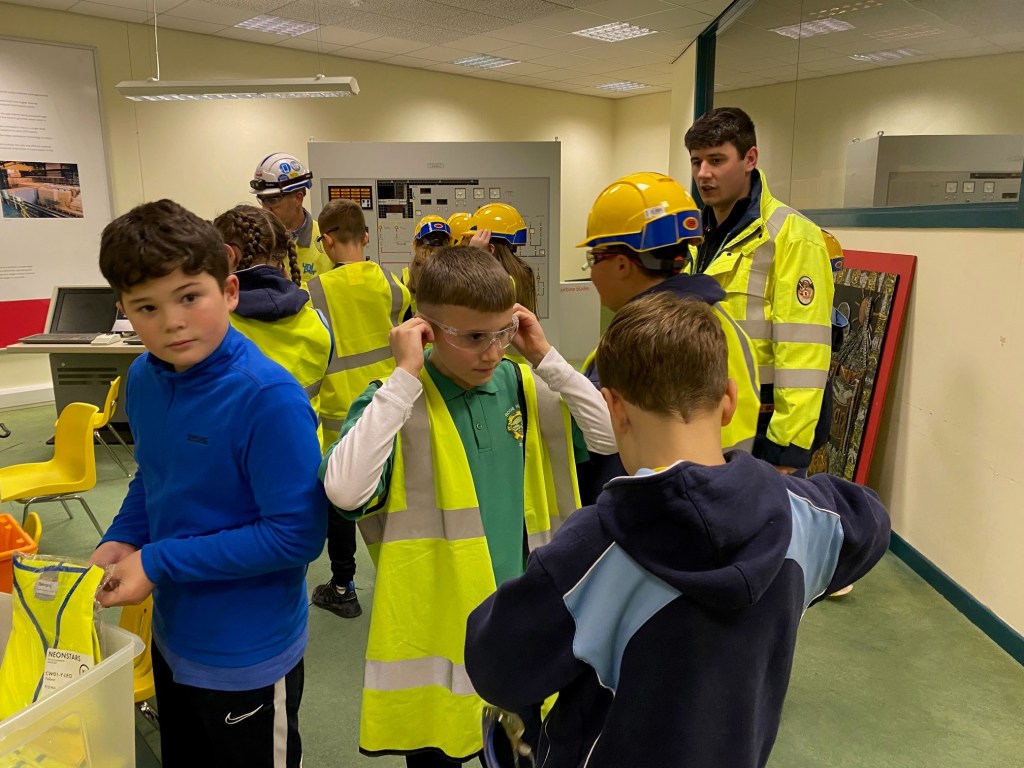
After lunch, the children suited up in full PPE gear for an extensive guided tour of the power station itself. For many, this was the highlight of the day – an exciting chance to see at first-hand how electricity makes its way from the station to their homes. They paid close attention to the sometimes quite detailed explanations given by their guides and asked many searching questions.
They were particularly interested in how water from the River Dee is used in the station’s cooling towers. The water is pumped from the river, filtered, used in the cooling process, and then returned to the river even cleaner than before. This sustainable practice demonstrated how the station minimises its environmental impact and protects local ecosystems.
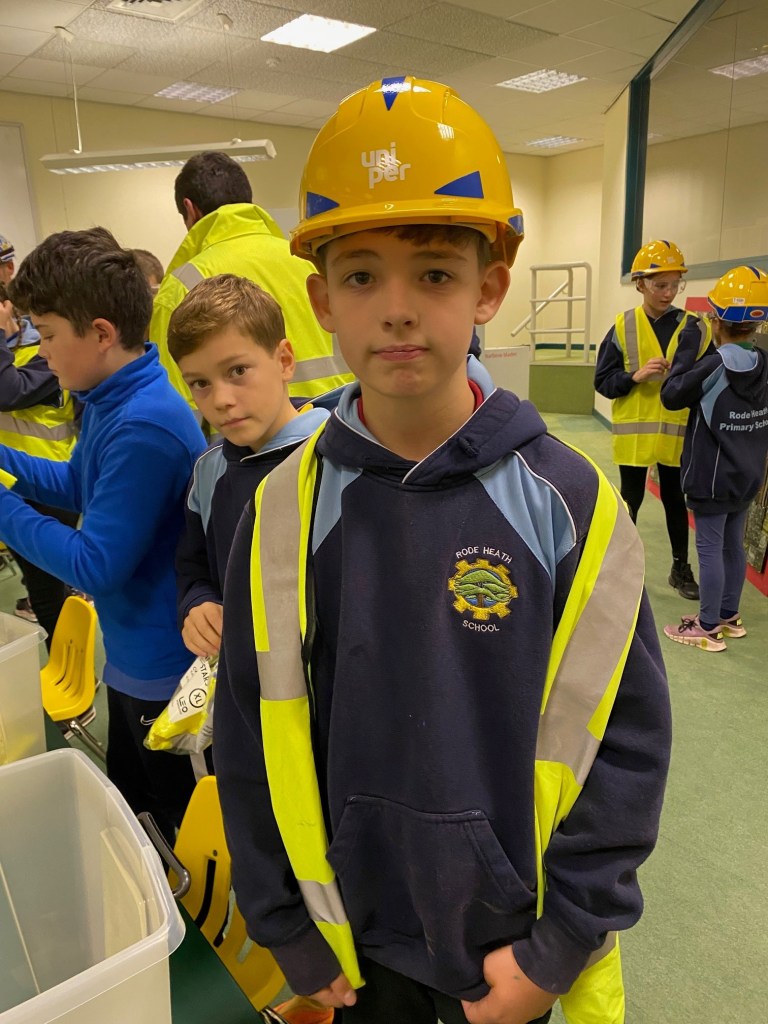

High Voltage and the Journey Home
As the students walked past the towering pylons, they learned how electricity travels efficiently from the power station to their homes. They were captivated by the enormous transformers that step up the voltage to an impressive 400,000 volts, enabling electricity to travel long distances. At local substations, this voltage is later adjusted to 240 volts to safely power homes and businesses.
Perhaps the most thrilling part of the tour was seeing the gas turbines in action. Connah’s Quay has four single-shaft units – each with a gas turbine, a heat recovery steam generator, a steam turbine, and a generator – which explains the station’s four chimneys. Witnessing these massive turbines working to generate electricity brought the science of energy production to life for the students.
An Unforgettable Experience
All too soon, our visit came to an end. The children left the power station buzzing with excitement, each carrying a goody bag courtesy of Uniper and, more importantly, a newfound appreciation for the incredible journey electricity takes to reach their homes. Now, every time they flick on a light switch, they’ll remember this experience and the fascinating world of power generation behind it.
Many thanks to Uniper, the dedicated staff at Connah’s Quay, and the CIEC for providing such an inspiring learning opportunity.






 Think Like An Engineer