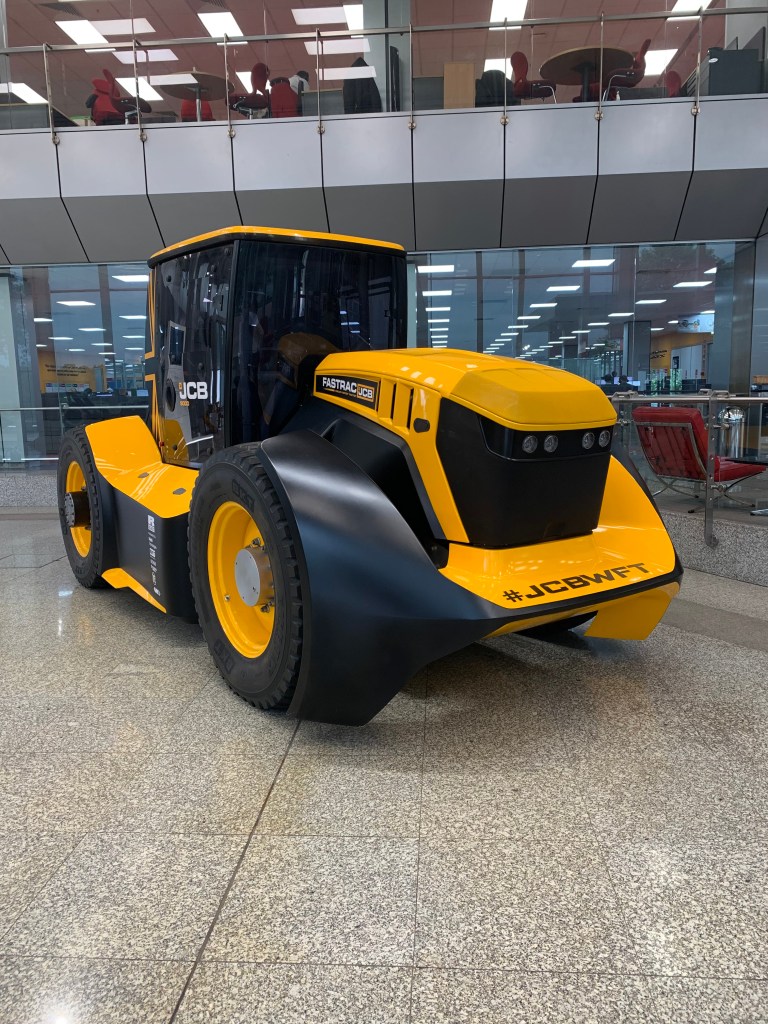
On Monday July 4th we welcomed four young engineers from JCB to Rode Heath, who led us in our summer term Engineering Day. The theme of the day was mechanical engineering and to inspire the children they brought along two of their iconic yellow machines.

QUICK FACT: Did you know that the JCB yellow has actually been patented, so that no-one is allowed to use that particular yellow without permission?
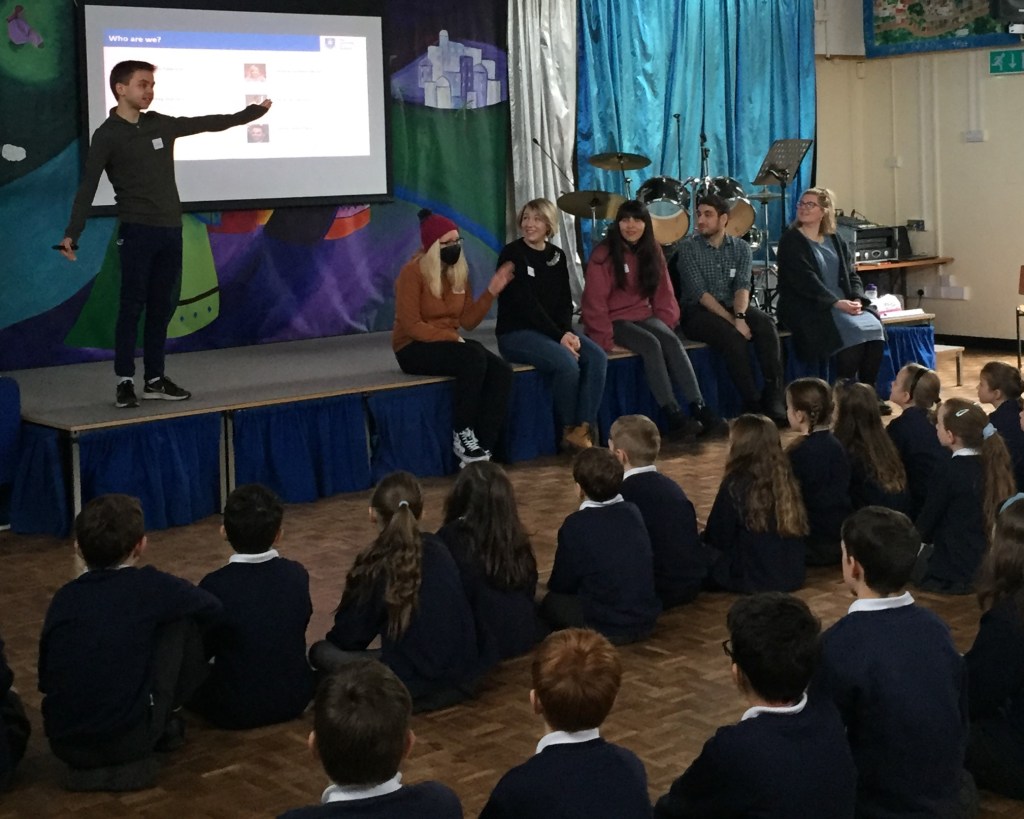
The day started with a customary assembly where we were introduced to our four JCB personnel: Erin, Harry and Ed – all Engineering Degree Apprentices – and Matt, who is a graduate engineer. What a professional group of young people! Miss Beard and I had already met them on a recent visit to the JCB World Headquarters in Rocester where we were treated to an extensive behind the scenes tour of the offices and production line. Hailed as a ‘factory in a landscape’ it certainly seems a fantastic environment to work in with three lakes and acres of parkland to wander around and look out on from the office windows.
WHO ARE JCB?
JCB is one of the largest privately-owned engineering and manufacturing companies in the UK and the world’s third largest manufacturer of construction machinery. With a global presence and manufacturing facilities on 4 continents, it employs over 11,000 people worldwide.
QUICK FACT: Did you know that JCB currently holds 3 world speed records?
- The world’s fastest diesel-powered car (2006 – 350 mph),
- The world’s fastest Backhoe Loader (2014 – 72 mph) and,
- The world’s fastest Tractor (2019 – 135 mph) – driven by Guy Martin and filmed as part of a feature programme on Channel 4.
The aim for all our Engineering Days is to develop a programme of activities that caters for all our pupils from Reception right up to Year 6.
The day started off with Reception and Year 1, who were particularly keen to look at the machines, parked in the Junior playground. It soon became clear that the tyres on the larger vehicle were actually bigger than some of the children themselves.

Many questions were asked before the children went inside to draw their own JCB – thinking particularly about the different parts that make up the machines and what role they play.
Year 2 focussed on the layout of the inside of the JCB cab, comparing it to the dashboards of their own family cars, photos of which parents had previously sent in. They were particularly taken by the hare and tortoise buttons which determine the speed at which the machine operates.
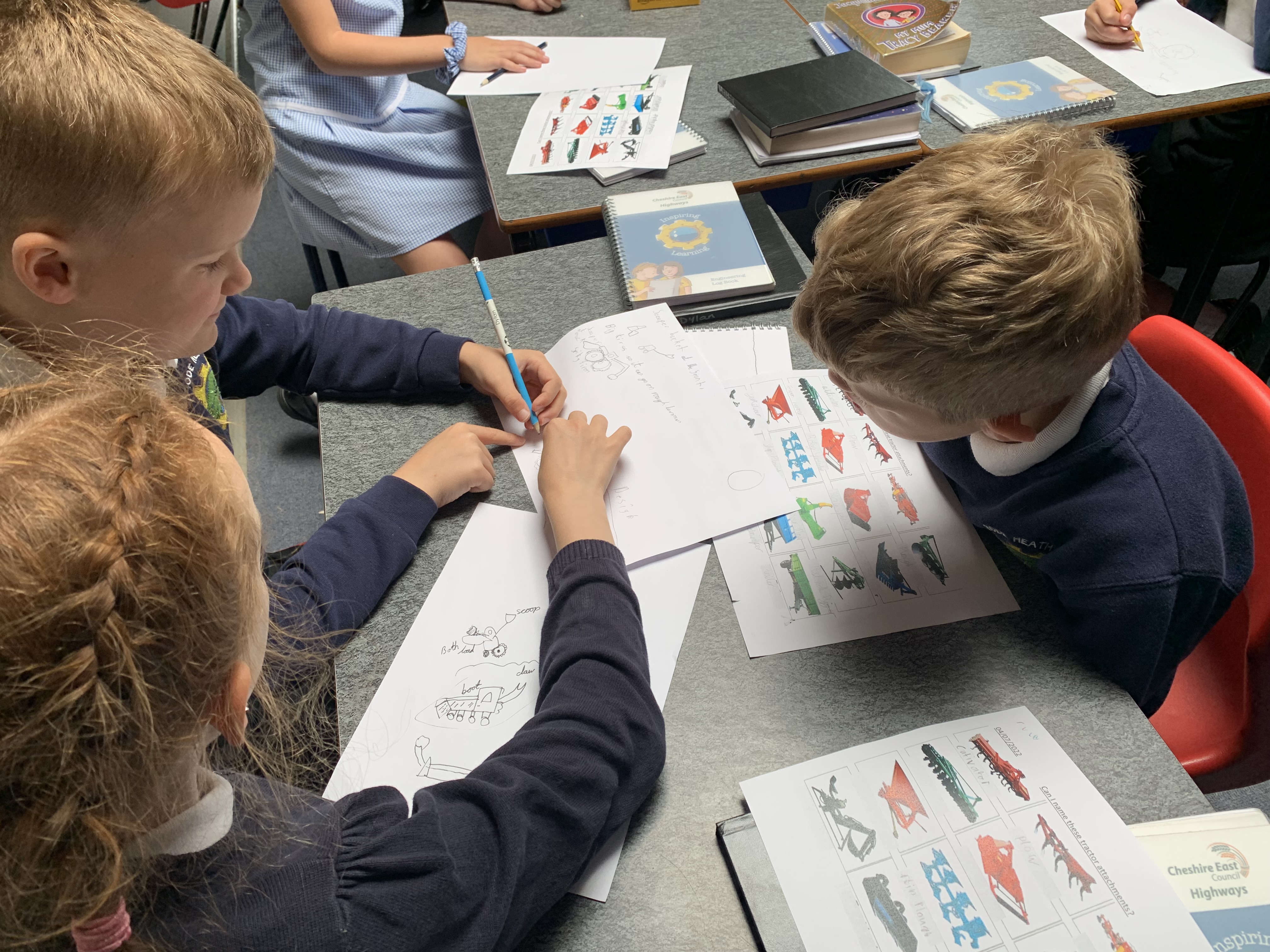
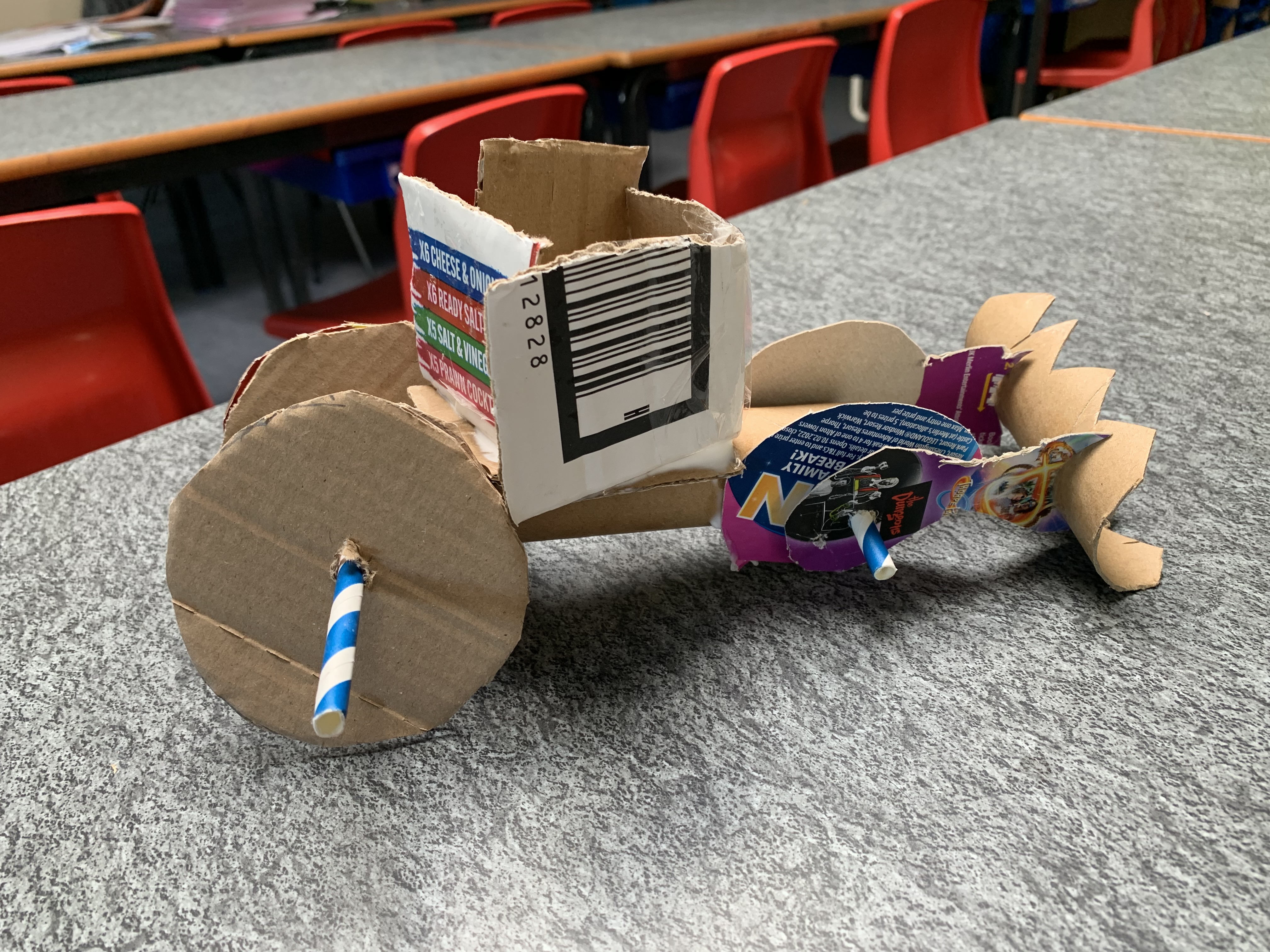
Meanwhile Years 3 & 4 had been investigating all the different attachments that it was possible to use with the JCBs – and they discovered a multitude, including folding grass forks, shovels, power grabs and even parts that provide permanent pot hole repairs.
Their task was to design and prototype their own ideas for attachments – many of which were very creative.


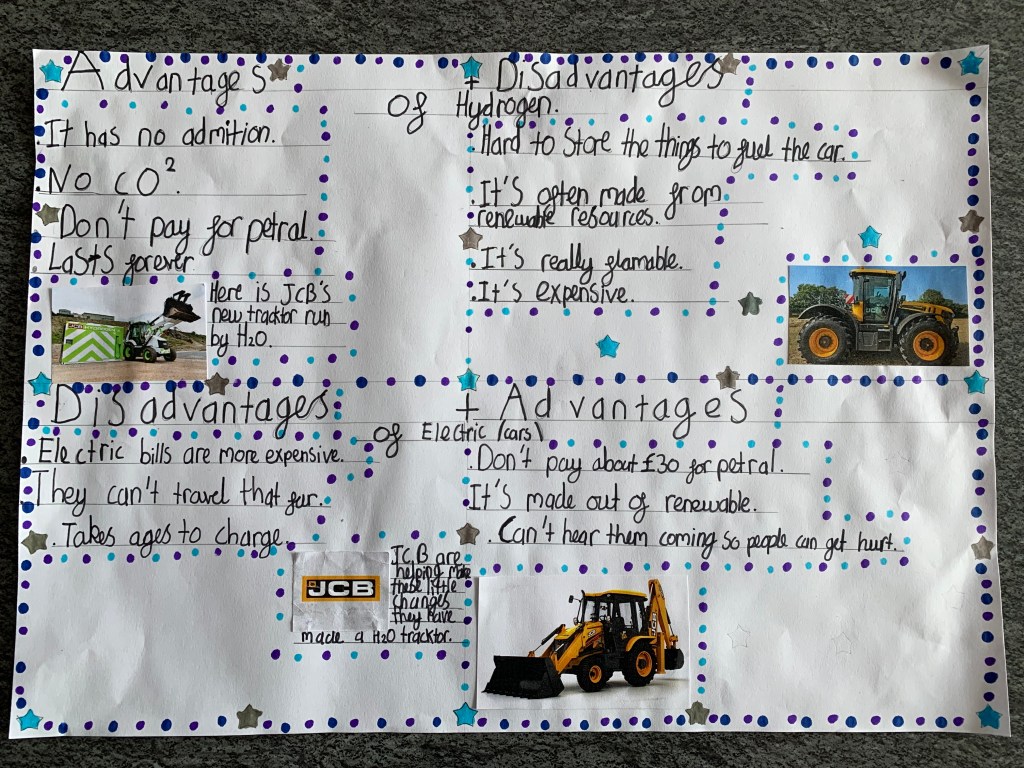
And, finally, Year 5 & 6 spent the morning debating the different merits of hydrogen and electric powered vehicles, creating posters to present their thoughts.

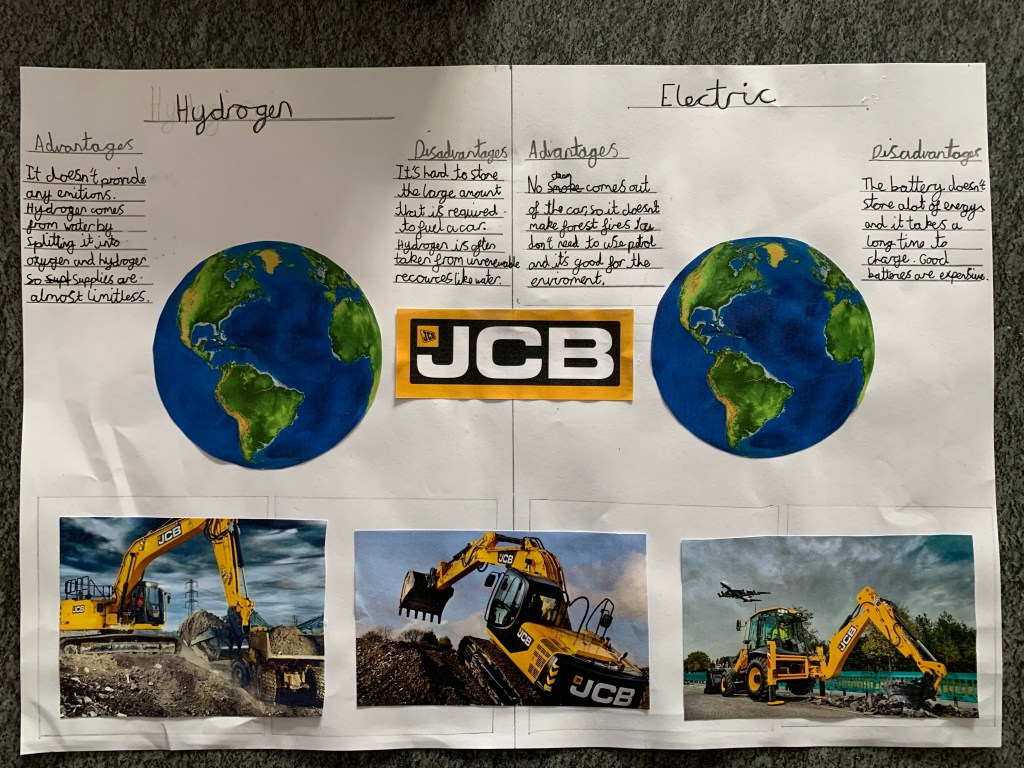
Their focus when examining the JCBs was on hydraulics and understanding how this principle is used to control the movement of the JCB attachments. Back in the classroom the children had the opportunity to experiment at first hand with mini excavators, using syringes and pipes filled with water.
Overall, the whole day was a huge success with children motivated and excited about their learning. Many thanks must go to Erin, Ed, Harry and Matt, who are fantastic ambassadors for their company, JCB.
Bringing real engineers into the school environment is so important as it not only makes learning relevant and purposeful for pupils but it builds on their existing STEM capital, raising awareness of the many and varied career opportunities available to them in the future.






 careless, and just as if twice nineteen didn’t matter a bit, and he thought that if he stood on the bridge and watched the river, he would know everything that there was to be known.”


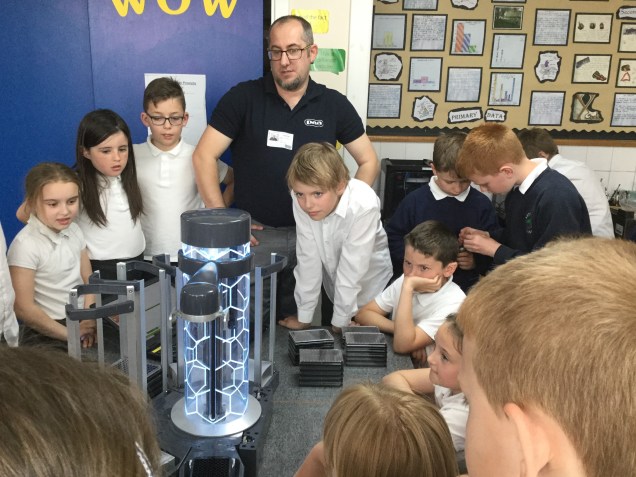
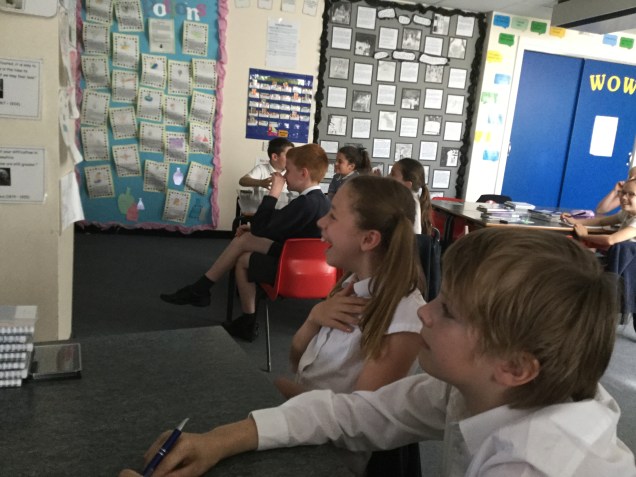
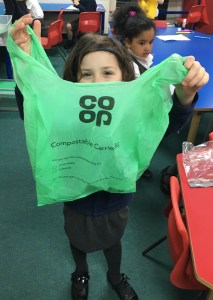 Obviously, if you are going to be re-purposing plastic, then you need to decide well in advance what resources you need to acquire and where you are going to store them. Parents are usually very good at responding to such requests. It is probably best for each teacher to organise their own collection.
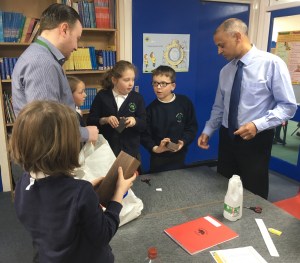 In this case of our Plastics Day – we were lucky enough to have three engineers from Cheshire East Highways helping us out for the morning: Vicky, Jon and Maddison. Their contribution was particularly relevant to the theme as the organisation has started using recycled plastic bottles to create materials which are then reused in the construction of bridges. Jon brought some samples with him to show the children.
 Think Like An Engineer