Linking Engineering with Literacy in Y5

We are very keen at Rode Heath to embrace Engineering Habits of Mind (EHoM) in all areas of the curriculum and have found that one of the ways to do this is through the Literacy books we are reading in class. In Year 5, the children have been studying ‘The Abominables’ by Eva Ibbotson: a story which follows a family of yetis who are forced, by tourism, to leave their home in the Himalayas and make their way across Europe to find a possible new home.

Having read the story, the Year 5s decided to design and build a trap to catch yetis. In doing this, they have not only applied engineering skills, but have been able to make use of their knowledge of the BBC micro:bit to create a mechanism to deploy the trap.

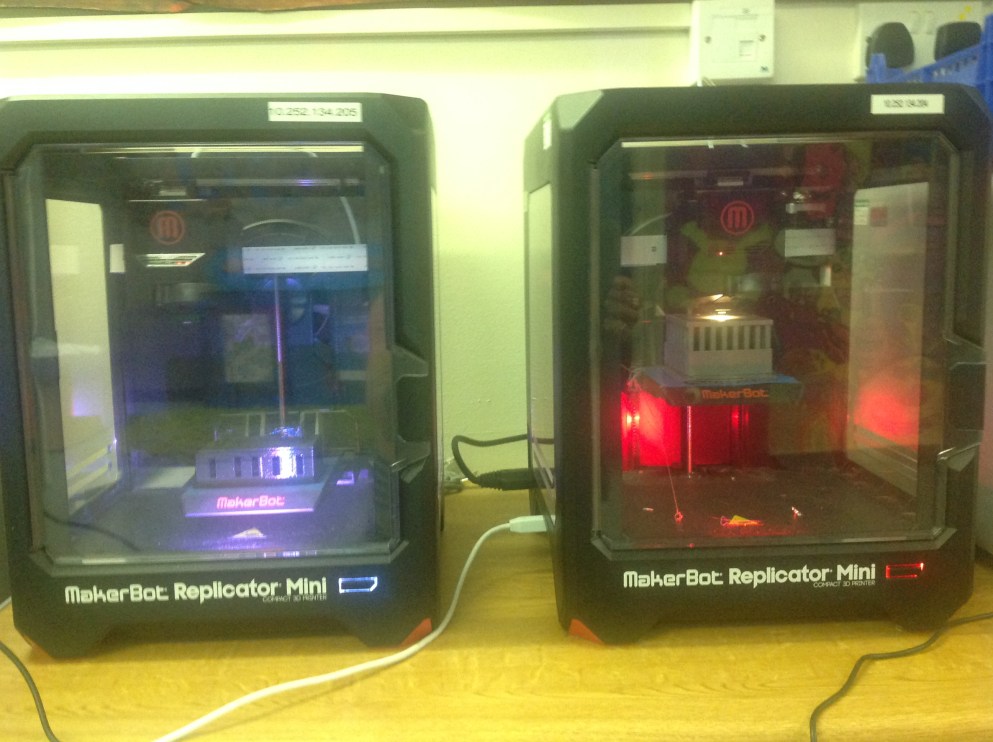
The traps were designed using Tinkercad, an online 3D CAD design tool, which allowed the children to turn their ideas into 3D models which could then be printed on our Makerbot minis. For further information about this printing app, visit:- https://www.tinkercad.com/

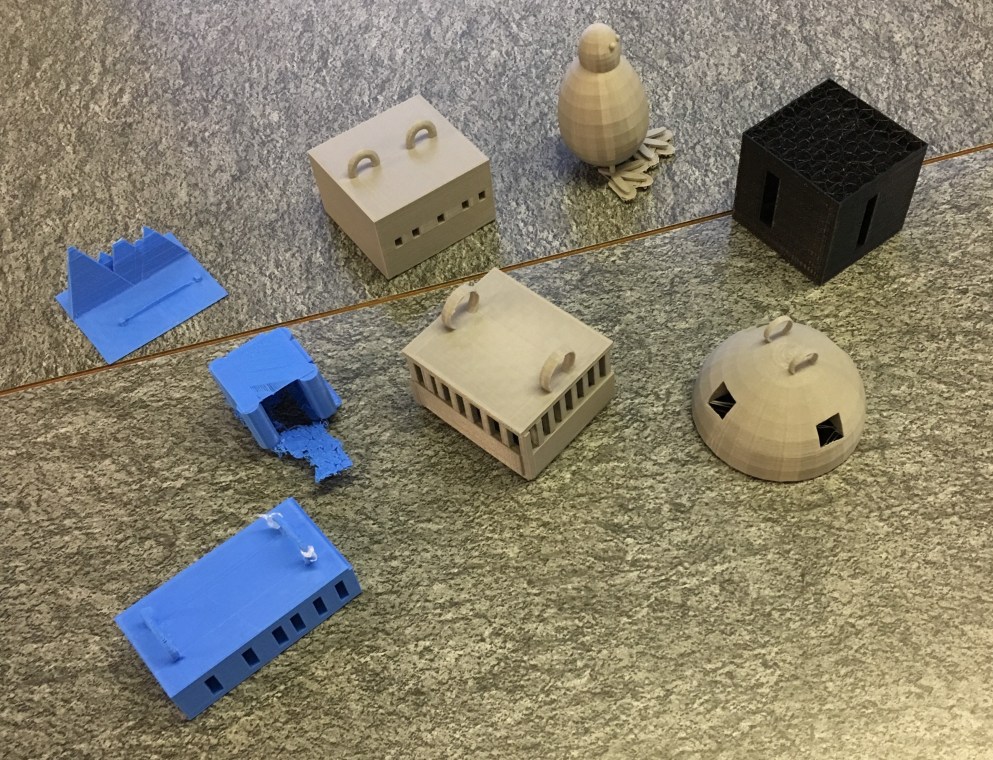
Here are some of the first designs to have come off the printers:

img_5770yeti-traps

Engineering Design Process –  Research and Explore

After thinking about the problem and asking some questions, we decided that there were certain features that needed to be incorporated into our design:-

  • the cage needed to be hollow, with a hole at the bottom, big enough for the yeti to fit inside, when the cage was dropped.
  • there should be holes around the outside of the cage, to enable the yeti to breathe once captured.
  • some of us added two rings to the top, so that the cage could be lifted.

We then drew a diagram of our proposed trap in our Engineering Log books and filled in the cover sheet with our success criteria.

Design and Create

We used Tinkercad to create 3D models of our drawings and then sent the file to the Makerbot minis. Our next step is to work out how we can use the micro:bits to create a mechanism to drop the trap on the unsuspecting yetis.


Micro:bits in Year 6

They say that you only really know whether you understand a subject if you can teach it to someone else. Well, that’s what happened during the afternoon of Monday 16th January, when the Year 5 class shared their BBC micro:bit expertise with the Year 6 class.

Mr Scott, Year 5 teacher and IT co-ordinator, was very pleased with the outcome:

The Year 5 children were excellent mentors, coaching older children on something new. They were able to implement one of the Engineering Habits of Mind – Systems Thinking – in order to explain how the software works.

The pairs then progressed to more varied and complicated lessons using the micro:bit and the Inventor’s Kit equipment. It was very interesting to see how Year 6 adapted to being taught by younger children and how they advanced as learners – operating the Breadboard.

This example of mentors helping others was a very worthwhile experience for the children involved and the teachers. It showed how mature and responsible the children can be when faced with a challenge.”

The Year 5 children were equally enthusiastic:

“It was very interesting to see how the Year 6s reacted to the micro:bit. They seemed to be very intrigued to learn about it. We had a go at different activities from the booklet that comes with the Inventor’s Kit, including a fan, a buzzer and a magic 8 ball. We think that the Year 6 class benefited from this help. You could tell because of how quickly they were able to use the product independently, once we had shown them the basics. We enjoyed being teachers and felt that it helped with our own understanding. Next time, we think we need to be more patient. We are hoping to go back in a few weeks to check understanding.”

By Jack, Finn, Megan, Claris & Rohan (Year 5)

We are waiting to hear from some Year 6 children . . .

The BBC micro:bit is a hand held, fully programmable computer, which was originally given free to all Year 7 children. It has many features including 25 red LED lights that can flash messages. When the product became generally available in 2016, we bought 15 Inventors Kits for our Year 5 class. Having spent the previous year using Codebugs in Year 4, the children were well placed to transfer their knowledge to the micro:bit. After learning the basics, they have recently being designing a trap to capture a Yeti – linking engineering to their class book: The Abominables.

For more information about the BBC micro:bit visit: http://microbit.org/about/

Sam Gratton, a Year 6 pupil, had this to say . . .

“The Year 5s were good at teaching us about the micro:bits; they really helped us all to move our learning on. I am now more confident with programming a micro:bit and can now code by myself. I can even make a fan spin round.

If you don’t know what micro:bits are, they are pocket-sized programmable computers. They can copy code onto a chip, which allows you to transport it on to another laptop. It’s also capable of answering ‘yes’ or ‘no’ questions.”


Water Powered Rocket Cars

Just before we broke up for Christmas, Mr Randall and I held two workshops with the Year 3 & 4 classes to try and build some water-powered pop bottle cars. Letting more than 60, 7-9 year olds, loose with saws, glue guns and drills, was quite a daunting prospect, but the children were very keen and we had a reasonable amount of adult help. What could possibly go wrong?

I love this idea, as the initial inspiration came from Ellie Jepson, a pupil in my class. She had spent the weekend working on a car with her dad and brought it into show us the following Monday. Not only that, but she then demonstrated her designs to all the KS2 classes – very confidently and articulately – clearly demonstrating that our Think Like An Engineer project is having an impact on learning. Not only are parents getting involved, but children are taking more responsibility for their own learning – fantastic.

To start Ellie’s water-rocket car project off, we set a piece of homework, which tasked the Year 3&4 children with producing some designs. They had to think about what kind of wheels they might use; how they were going to attach them to each other and the body of the car, and what they could do to make sure that it travelled as far and as fast as possible.

Some excellent ideas were produced and a couple of weeks later, we set about making some chassis to accommodate our pop bottles. It was fantastic just watching the engagement of the children and how on-task they were.

This was the second session we had held with two classes. The first had been an afternoon of learning basic skills, such as sketching, marking and cutting, joining materials and strengthening and reinforcing. This set of activities was taken from the James Dyson Ideas Box – a free kit for schools, which introduces primary children to the design process, using a Dyson Air MultiplierTM fan as a case study.

It was certainly a worthwhile exercise, with the benefits clearly visible in our chassis making session. Children were quite happily building, testing, deconstructing and improving their designs. All we needed now was a simple mechanism to reliably release them.

I found this clever device online at http://waterockets.com/

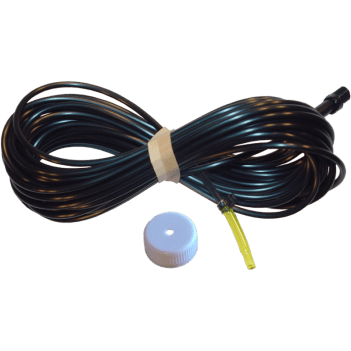
It consists of a launch-nozzle-single-stagelength of plastic hose, one end of which goes into a bicycle pump and the other end in a hole in the rocket’s bottle cap.

As you pump, the balloon-type end in the cap expands, holding the bottle in situ. As the pressure gets greater the balloon starts to gently slip out, eventually releasing the bottle, which then shoots off at great speed.

As a launching device, it worked extremely well; however, unfortunately, our cars were not quite strong enough to survive their journey!

It proved to be an excellent learning curve for the children. It was soon very clear that we needed to make our chassis much stronger; attach the bottle more securely and choose sturdier wheels . Moving in a straight line definitely proved quite difficult; although we did have some guide rods that we could have used.

Next we are thinking of adding a motor to our chassis, which would definitely be more controllable! Some children have already had a go.


Year 5 visit to Solvay and Catalyst

Dear Diary

Today was very exciting. We arrived at school and sat at our desks with our bags. I was looking forward to going to Solvay and Catalyst so much, that I thought every second of waiting was a minute and every minute was an hour! Finally, everyone was there and the coach had arrived. We all lined up and got onto the coach.

After a long drive, we arrived at Solvay. If felt tense as we went into such as vast, noisy place. We went into the conference room and sat in front of a big screen. Then, Martin gave us a brief introduction and told us about what they did and how they did it. They make a chemical called Hydrogen Peroxide, then they wash it with water to make liquid bleach.

We also learnt that Ernest Solvay was the founder of the company and there used to be only one woman who worked there! I thought that was amazing. Then, we were split into three groups and we put on a protective coat, a hard hat and some protective glasses.

After that, our group went into the control room. It was very hot and stuffy, but we did learn a lot and our brains didn’t turn to mush from the heat. An alarm went off occasionally and the controllers had to sort it out. When the problems were fixed, it was time for us to have our tour of the plant. On our tour, I was surprised my nose didn’t explode from the stink of chemicals.

Our last visit was to the laboratory where we tested if liquids were different with some special paper. I wasn’t surprised that liquid B was just water. Next, it was time for us to travel to Catalyst for lunch.

As we arrived, we looked out at the River Mersey and saw a new bridge being constructed. As first Abi and I thought it was a rocket ship!

Once we had eaten our lunch, we went to the plastic workshop and sat around five tables and marvelled at the heat reactors, like the paperclip and the mugs. Then we were all given a measuring jug full of tiny, plastic white balls which we were to heat up until they turned clear.

Once we had done that, we moulded it into a pancake shape and heated it up again. Then, we did this one more time, but this time moulding glitter into it. Once it was heated, we quickly shoved it into a mould and left it to go hard. When it had hardened, we ended up with a very nice keyring!

Finally we went up a large tower to the very top and looked down at the wonderful view. It was a very good end to the day.

By Isobel Jenkins

Dear Diary

When I first arrived at Solvay, I was quite surprised that it was outside, as I thought that factories were always inside. We had to wear lab coats, hard hats ad glasses. My lab coat was like a wedding dress on me!

Our class was split into 3 groups. I was in Mr Leech’s group; our tour guide was a lady called Kal.

When we got outside, there was so much to see, like all the pipes and the different buttons and wires and switches. I really enjoyed looking at the plant as there were so many interesting smells in the air. However, I was glad to get out of the small tempest and into the control room which controls the whole plant. (It’s always the warmest).

Also we learnt about if you spilt any chemicals on you, you’d have to take a special shower. We learnt that only 59 people work on the plant and only 4 at night, which really surprised me!

Lastly, we went to the lab, which was my favourite part because there were so many brand-new smells wafting in. As we left Warrington, we saw the weighbridge which is where the produces get weighed.

Next, starving hungry, we went to Catalyst and after lunch we made our own keyrings out of plastic.

By Georgia Flanagan

Year 4 Visit To Catalyst

When we arrived at our destination (Catalyst Science museum) it wasn’t open yet so we walked round the grounds. On our walk, we saw a bridge that was being constructed; it was going to be a suspension bridge when finished.

After that, Catalyst was open so we went inside. Our first activity was on the top floor in the observatory. There we were met by two engineers who asked us to look out of the windows and find as many bridges as possible. The view from there was impeccable; you could see several different types of bridges in the surrounding area, including an arch bridge and a suspension bridge. Following this we were given a set of K’nex (K’nex is a bit like Lego) and an instruction booklet. Then they explained that in the construction set were the pieces to make a model beam bridge. We were split up into teams and started making our models. My team were making it much quicker than any other team so we were told to take out a few strengthening pieces to show the class just how important they were. As soon as everybody had finished, we tested each bridge using bean-bags. As our bridge had just four supports, it hinged like mad. Every team’s bridge survived including our hinging one.

We finished this workshop ahead of schedule so we had time to go into the puzzle room. In here there were lots of puzzles and games. One of the games was called Nim’s game. The game consisted of twelve rectangular pieces; the rules were you could only take pieces in the same row. The aim of the game was to make your opponent to take the last piece.

After lunch, we walked to our next activity where we were met by Claire and Eddie again; however, this time we had 3 more engineers named Tom, Marcus and Joanna. Our task was to build a suspension bridge covering about ten metres. Firstly, we were split into two groups and put on high visibility jackets, gloves and hard hats; these were to keep us safe. Following that Claire told us how to put the different parts together, this was really important as otherwise we would not be able to complete the task.  We were then told to start making. To start with, we clipped a wooden plank to a weighed down frame, after this, we attached this plank on steel cables to another aluminium frame. Following this we put two metal pegs into the plank and, using the same method, attached another plank. We kept on repeating this until the two sides met in the middle. To test it, everybody walked across it and it held them too. Then came the next part; taking it apart. To do it, we had to reverse the method to put it together. This was difficult as the steel cables were really tight, this made them difficult to undo. Eventually, we had taken it down; therefore we had completed our task.

We had completed all our tasks so we had to get on the bus to go home.

By Daniel S                                                                                               

Overview

At Rode Heath Primary school, we believe in encouraging our children to be curious about the world around them and are committed to providing an environment where they can develop real-life skills such as creative problem-solving. Following on from our hugely successful Out of This World Space project, we have developed a new whole school initiative Think Like an Engineer, which will be documented in these pages.

The Think Like an Engineer project stems from our involvement with the Tinker Tailor Robot Pi project run by Lynne Bianchi from Manchester University. Over the course of 2015-2016 we learned about Engineering Habits of Mind and introduced the concept of Tinkering to our Year 3 & 4 classes. This proved to be so successful that we decided to take the idea EHOM further and independently developed our own Engineering Log Book to give to each child from Reception up to Year 6.

Contained in the log book is a series of engineering levels through which children will progress as they rise up the school. Reception children will start as technicians and move towards achieving the role of senior engineer by the end of Year 6. The log books contain tables of competencies at the back which children will need to meet before they can move on to the next engineering level. These are based on the UK Standard for Engineering Competence which have been rewritten into I can statements.

The aim of the project is to develop a collection of engineering activities to be carried out by individual year groups. Ideally these will span a wide range of engineering disciplines from mechanical and electrical, through to chemical, software and environmental. Where possible, engineering activities will be linked to an aspect of the science curriculum for that year group.

Central to each unit will be the Engineering Design Process (EDP): ask, imagine, plan, create, improve.  Emphasizing the EDP will help us to foster pupils’ questioning and creativity, and allow pupils to enhance their problem-solving skills. We will also be encouraging children to develop Engineering Habits of Mind (EHoMs) and translate these working practices to other areas of the curriculum.